The landscape of cardiovascular medicine is shifting. For decades, the primary focus of post-heart attack care has been on physical interventions—stents, bypass surgeries, and blood thinners. While these treatments have saved countless lives, a significant “residual risk” remains. Even with the best available care, one in ten patients may face a fatal event within the first year following a heart attack.
However, a groundbreaking clinical trial, recently highlighted by the Royal Papworth Hospital and Cambridge University, suggests that the next frontier in cardiology isn’t just about fixing the plumbing of the heart; it’s about managing the body’s own defense system. By targeting the immune system, researchers have found a way to potentially stop repeat heart attacks before they even begin.
As a top cardiologist in Pune, Dr. Suhas Hardas has always emphasized that heart health is a multi-faceted battle. At Hardas Heart Care, we believe in staying at the absolute forefront of such medical innovations to provide our patients with the most advanced care possible.
The Role of Inflammation in Heart Disease
To understand this breakthrough, we must first understand why heart attacks happen. A heart attack occurs when a plaque in a coronary artery ruptures, causing a blood clot that blocks flow to the heart muscle. But what causes that plaque to become “vulnerable” or “unstable” in the first place?
The answer is inflammation.
Inflammation is the body’s natural response to injury, but when it becomes chronic within the walls of our arteries, it acts like a slow-burning fire. It weakens the fibrous cap of the plaque, making it more likely to burst. Patients who have recently suffered a heart attack often exhibit high levels of inflammation in their major blood vessels—a “red flag” for a second, often more devastating, event.
The IVORY Trial: A Paradigm Shift
The results of the IVORY and IVORY-FINALE clinical trials, published in Nature Medicine, have introduced a potential game-changer: a drug called Aldesleukin.
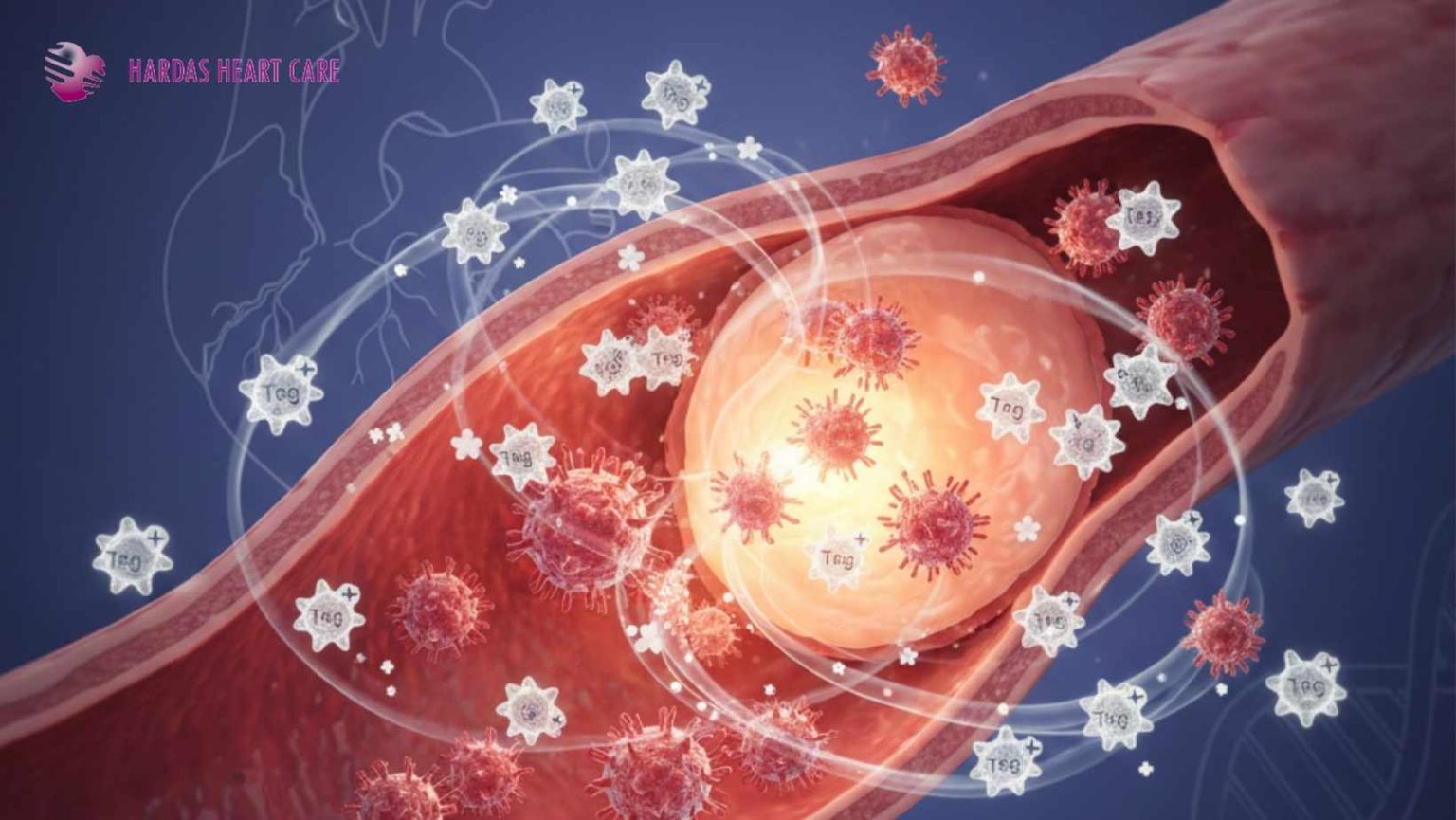
Originally used in high doses to treat certain kidney cancers, Aldesleukin has been found to be remarkably effective in low doses for heart patients. Instead of attacking the immune system, the drug boosts a specific type of white blood cell known as Regulatory T cells (Tregs).
Tregs are the “peacekeepers” of the immune system. Their role was so significant that their discovery was awarded the 2025 Nobel Prize in Physiology or Medicine. In the context of heart disease, these cells help to:
Dampen the inflammatory response in the arteries.
Stabilize existing plaques.
Promote healing of the heart tissue after an injury.
Remarkable Results: Zero Repeat Attacks
The trial monitored sixty patients who had recently suffered heart attacks. Half were given a low-dose Aldesleukin treatment, while the other half received a placebo. The findings were nothing short of extraordinary:
- Inflammation Reduction: PET scans showed that Aldesleukin reduced inflammation in the blood vessels by nearly 8% on average. The effect was most pronounced in the vessels that were the most inflamed.
- Preventing Recurrence: Two years into the follow-up, none of the participants who received the treatment had suffered another heart attack. In contrast, 11% of the placebo group experienced repeat cardiac events.
This research represents a “paradigm shift.” We are moving away from simply reacting to blockages and moving toward proactively stabilizing the internal environment of the cardiovascular system.
A Patient’s Perspective: Mark’s Story
Consider the case of Mark Andrews, a 59-year-old IT specialist. Despite being active and healthy, Mark suffered a heart attack while cycling. After receiving a stent at Royal Papworth Hospital, he joined the IVORY trial.
“I was keen to join the trial… knowing the team would be closely monitoring my health,” Mark shared. Three years later, he remains active and symptom-free. Mark’s story is a testament to how integrated care—combining traditional interventions like stents with cutting-edge inflammatory management—can return a patient to a full, vibrant life.
Why This Matters for Patients in Pune
In India, and specifically in rapidly developing hubs like Pune, the prevalence of coronary artery disease is rising among younger populations. Stress, diet, and sedentary lifestyles contribute to the chronic inflammation that fuels heart disease.
As a top cardiologist in Pune, Dr. Suhas Hardas notes that while we have mastered the art of complex angioplasties and interventions, the “biological” side of the disease requires equal attention. “Our goal is not just to open a blocked artery,” says Dr. Suhas Hardas, “but to ensure that the patient’s system is healthy enough to prevent the next blockage from ever forming.”
How Dr. Suhas Hardas Implements Advanced Heart Care
At Hardas Heart Care in Shivaji Nagar, Pune, we incorporate the principles of these global breakthroughs into our daily practice. While Aldesleukin is currently undergoing larger trials for widespread approval, the lesson it teaches—that managing inflammation is key—is something we act on today through:
- Comprehensive Diagnostics: Using 2D Echocardiography, Stress Tests, and advanced imaging to monitor heart function and vascular health.
- Preventive Cardiology: Implementing lifestyle and medicinal protocols that lower systemic inflammation, such as lipid management and dietary counseling.
- Holistic Recovery: Much like the “specialist cardio rehab” Mark received in the UK, our facility focuses on lifestyle modification and recuperation to ensure long-term success.
The Future of Heart Care
The repurposing of an anti-cancer drug like Aldesleukin for heart health is a brilliant example of medical efficiency. Since the drug is already known to be safe for human use, it may reach the public much faster than a brand-new compound.
For patients searching for the top cardiologist in Pune, it is vital to choose a specialist who understands these evolving trends. The future of cardiology lies in Precision Medicine—treating the individual’s unique immune profile to protect their heart.
Take Charge of Your Heart Health
If you or a loved one has recently suffered a heart attack, the journey doesn’t end with a stent or a prescription. Understanding your risk of a repeat event and managing the underlying inflammation is essential.
Dr. Suhas Hardas and the team at Hardas Heart Care are committed to bringing world-class cardiac insights to Pune. From advanced interventional procedures to preventive strategies that mirror the latest global research, we are here to protect your heart.
Contact Hardas Heart Care today to schedule a comprehensive evaluation and learn how we can help you lead a heart-healthy life.