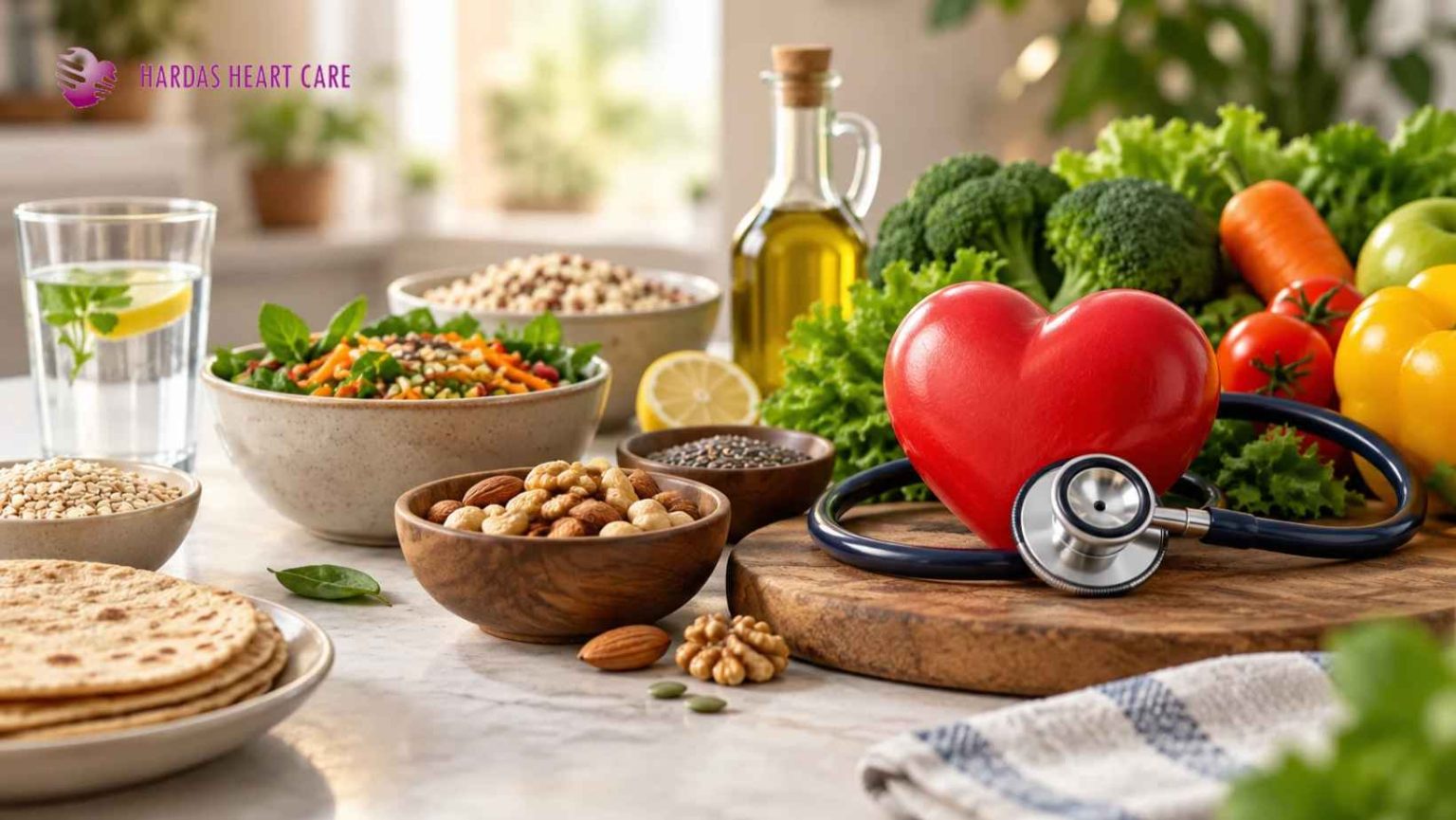
There is no single “best food” or one special diet that can protect your heart. The best heart-healthy diet is one built around vegetables, fruits, whole grains, pulses, nuts, healthy sources of protein and unsaturated fats, while keeping salt, added sugar, saturated fat, highly processed foods and excess calories under control.
As a cardiologist, one of the most common questions I hear is, “Doctor, what should I eat to keep my heart healthy?”
Many people expect me to name a particular oil, fruit, dry fruit or supplement. But heart health does not depend on one magical food. It depends much more on the overall pattern of eating that you follow every day.
And this is particularly important for us in India.
Our traditional diets already include many heart-friendly foods—dal, vegetables, fruits, whole grains, beans, nuts and seeds. The problem is that modern eating habits can add large amounts of salt, sugar, refined carbohydrates, fried foods, processed foods and excess calories to an otherwise healthy diet.
So when I advise my patients about diet, I don’t ask them to completely abandon Indian food. I ask them to understand what to eat more often, what to eat less often, and what small changes can make their everyday meals healthier.
What does a heart-healthy diet actually mean?
A heart-healthy diet is not a crash diet.
It is not about surviving on salads or completely avoiding carbohydrates. And it certainly does not mean that you can never enjoy your favourite food again.
It means creating a regular eating pattern that gives your body adequate nutrition while reducing the dietary factors that contribute to problems such as high blood pressure, unhealthy cholesterol levels, excess weight and diabetes.
Current American Heart Association guidance emphasizes vegetables and fruits, whole grains, healthy protein sources, unsaturated fats, minimally processed foods and lower sodium intake, while limiting added sugars, saturated fats and highly processed foods.
The World Health Organization similarly recommends a varied diet based on vegetables, fruits, legumes, whole grains and other nutritious foods, with limited salt, free sugars, saturated fat and industrially produced trans fat.
In simple words, your heart does not need a fashionable diet. It needs a sustainable one.
Can an Indian diet be good for your heart?
Absolutely.
There is a common misconception that eating for heart health means switching to Western-style foods. It doesn’t.
An Indian diet can be very heart-friendly when it is based on sensible portions and minimally processed foods.
Dal, rajma, chana, sprouts, vegetables, fruits, whole grains, millets, nuts and seeds can all fit into a heart-healthy eating pattern. For people who eat non-vegetarian food, fish, skinless poultry and other lean protein sources can also be included appropriately.
The concern is not whether a food is “Indian” or “Western.” The more important questions are:
- How much are you eating?
- How often are you eating it?
- How is it prepared?
And what does your overall diet look like?
For example, dal with vegetables and a whole-grain roti is very different from a meal dominated by refined carbohydrates, fried food, salty snacks and a sugary drink.
What should you eat more often for a healthy heart?
I usually encourage my patients to make vegetables a regular part of their meals rather than treating them as something that has to be eaten only when they are “on a diet.”
Include a variety of vegetables through the week. Leafy greens, gourds, carrots, beans, cauliflower, cabbage, tomatoes, okra and other locally available vegetables can all contribute to a balanced diet.
Fruits are also important. Whole fruits provide fibre and nutrients and can be part of a heart-healthy eating pattern. The WHO recommends that adults and children over 10 aim for at least 400 grams of fruits and vegetables per day, although individual nutritional needs can vary.
Pulses and legumes are particularly useful in an Indian diet. Dal, chana, rajma, peas and other beans provide protein and fibre and can help reduce dependence on heavily processed or high-fat protein sources.
Whole grains are another important part of the picture. Depending on your dietary needs, foods such as oats, whole wheat, millets and brown rice can be incorporated instead of relying heavily on refined grains. The key is not to label one grain as a “superfood,” but to increase dietary variety and fibre.
Nuts and seeds can also be included in appropriate portions. They provide unsaturated fats and other nutrients, but remember that they are calorie-dense. A healthy food can still become excessive if the quantity is very large.
What about cooking oil?
This is one of the questions I hear most often: “Doctor, which oil is best for the heart?”
My answer is usually more nuanced than simply naming one brand or one oil.
The type of fat matters, but the total amount of oil you use also matters.
Current dietary guidance recommends choosing sources of unsaturated fats in place of saturated fats. The American Heart Association specifically recommends using non-tropical liquid plant oils instead of sources of saturated fat.
In an Indian kitchen, the practical approach is to use cooking oils in moderation and avoid repeatedly deep-frying food. You can use appropriate liquid vegetable oils as part of a balanced diet rather than believing that using a particular oil gives you permission to eat unlimited fried food.
I also caution patients against assuming that “cold pressed,” “natural,” or “traditional” automatically means heart-healthy. The entire meal and the amount consumed matter.
Is ghee bad for the heart?
Ghee is another subject that often creates confusion.
You do not have to think of food as simply “good” or “bad.” But ghee is a source of saturated fat, and excessive intake of saturated fat is not recommended as part of a heart-healthy dietary pattern. The WHO and AHA both recommend limiting saturated fats and replacing them, where appropriate, with unsaturated fats.
So the message is not necessarily “never eat ghee.”
The better message is “don’t assume that more ghee is better for your heart.”
If you already have coronary artery disease, high cholesterol, diabetes or other cardiovascular risk factors, your individual dietary plan may need to be more specific.
How much salt is too much?
This is an area where I ask patients to be particularly careful.
High sodium intake can increase blood pressure, and high blood pressure is an important risk factor for cardiovascular disease. The WHO recommends that adults consume less than 2 grams of sodium per day, equivalent to less than 5 grams of salt per day.
The challenge is that salt doesn’t come only from the salt shaker.
Pickles, papad, packaged snacks, instant foods, sauces, processed foods and restaurant meals can contribute significant amounts of sodium.
You may therefore be eating “home-cooked food” and still consuming more sodium than you realise.
One simple habit I recommend is to gradually train your taste buds to accept less salt. Herbs, spices, lemon, garlic, ginger and other flavouring ingredients can help make food enjoyable without depending entirely on salt.
If you have hypertension, heart failure, kidney disease or another condition where sodium restriction is particularly important, discuss your individual target with your doctor.
What about sugar and sweets?
Sugar is not directly “stuck” to the arteries in the way people sometimes imagine, but regularly consuming excessive added sugar can contribute to excess calorie intake, weight gain and metabolic problems that can increase cardiovascular risk.
The WHO recommends limiting free sugars, and current heart-health guidance also emphasizes minimizing added sugars, particularly from sweetened beverages and highly processed foods.
This is why I often pay attention not only to sweets and desserts but also to what patients drink.
Tea or coffee with several teaspoons of sugar, soft drinks, sweetened juices, energy drinks and other sugary beverages can quietly add a significant amount of sugar to the diet.
Having a sweet occasionally is different from making sugary foods and drinks a daily habit.
Are carbohydrates bad for your heart?
No.
Carbohydrates are not automatically unhealthy, and completely eliminating them is not necessary for most people.
The more important issue is the quality and quantity of carbohydrates.
Whole grains, vegetables, fruits and pulses provide carbohydrates along with fibre and other nutrients. Highly refined carbohydrates and foods with added sugars are different from these minimally processed sources.
For example, there is a nutritional difference between eating a balanced meal containing dal, vegetables and a reasonable portion of whole-grain roti and regularly consuming large portions of refined carbohydrates accompanied by sugary or fried foods.
If you have diabetes, obesity or another metabolic condition, your carbohydrate intake may need more individualized attention.
What about fried food?
This is where moderation becomes especially important.
Deep-fried foods can be high in calories and may contain significant amounts of unhealthy fats depending on the food and cooking method. Regular consumption of fried and highly processed foods is not consistent with a heart-healthy dietary pattern.
You don’t necessarily need to declare war on samosas, pakoras or your favourite festive food.
But there is a big difference between occasionally enjoying something and eating it as a routine part of your diet.
For everyday cooking, methods such as steaming, boiling, grilling, roasting or lightly sautéing can help reduce dependence on deep frying.
What should you eat if you already have heart disease?
This is where I want to make an important distinction.
A person who is trying to prevent heart disease and a person who has already had a heart attack, undergone angioplasty, has heart failure or has another cardiovascular condition may not have exactly the same dietary requirements.
For example, someone with heart failure may need individualized advice about sodium and fluid intake. Someone with diabetes may need specific attention to carbohydrate portions. Someone with kidney disease may have different requirements for potassium, phosphorus, protein or fluid.
So if you already have a heart condition, don’t copy a diet from the internet simply because it is labelled “heart healthy.”
Your diet should fit your medical condition, medications, blood pressure, blood sugar, cholesterol, kidney function, weight and overall health.
Is eating healthy enough to prevent a heart attack?
Healthy eating can significantly contribute to cardiovascular health, but I would never tell a patient that diet alone guarantees protection from a heart attack.
Heart disease is influenced by several factors.
Blood pressure, cholesterol, diabetes, smoking, physical inactivity, obesity, family history, age and other factors all play a role in cardiovascular risk.
This is why I look at the whole patient rather than one food or one blood test.
You may eat very well but still have high blood pressure or a strong family history of premature heart disease. Conversely, someone with normal cholesterol may still have cardiovascular risk from other factors.
Diet is one important part of prevention—not the entire story.
What does a simple heart-healthy Indian day of eating look like?
Rather than giving every patient a rigid meal plan, I prefer to think in terms of a pattern.
A typical day can include a balanced breakfast with nutritious grains or other minimally processed foods, along with an appropriate protein source. Lunch can include vegetables, dal or another protein source and a sensible portion of whole grains. Fruit can be used as a snack instead of highly processed packaged foods. Dinner can follow the same principle, with attention to portion size and the amount of oil and salt used.
If you eat non-vegetarian food, fish or lean poultry can be included depending on your individual dietary pattern.
And yes, you can still eat Indian food.
The goal is not to make your diet boring. The goal is to make your everyday choices healthier.
Do I need expensive “superfoods” for heart health?
No.
You do not need imported berries, expensive supplements or fashionable health products to build a heart-healthy diet.
Many nutritious foods are ordinary foods that have been part of Indian kitchens for generations.
Vegetables, seasonal fruits, dal, beans, whole grains, nuts and seeds can form the foundation of a healthy diet. The WHO emphasizes dietary diversity and locally available foods rather than dependence on one special food.
In my view, consistency is far more important than novelty.
Eating ordinary nutritious food consistently is much more valuable than buying an expensive “heart health” product occasionally.
What is the biggest mistake people make with heart-healthy diets?
One of the biggest mistakes is looking for a single food to solve a complex problem.
Someone may start eating almonds every morning but continue eating large amounts of fried food, salty snacks and sugary drinks.
Someone else may switch to a supposedly “healthy” oil but use excessive quantities.
Another person may stop eating rice completely but replace it with highly processed foods.
Heart health doesn’t work this way.
The overall pattern matters.
The latest AHA dietary guidance similarly emphasizes the complete dietary pattern—vegetables and fruits, whole grains, healthy protein, unsaturated fats and minimally processed foods—rather than focusing on individual “superfoods.”
My advice as a cardiologist
If you are confused about what to eat for your heart, don’t start by asking, “Which food should I completely stop eating?”
Start by asking, “What can I improve in my everyday meals?”
- Can you add more vegetables?
- Can you replace some refined grains with whole grains?
- Can you include more pulses and plant-based protein?
- Can you reduce the amount of salt?
- Can you cut down on sugary drinks?
- Can you eat fried and highly processed foods less frequently?
- Can you control your portions?
These small decisions, repeated consistently, are much more meaningful than following a strict diet for two weeks and then abandoning it.
And remember: a heart-healthy lifestyle is not only about food. Regular physical activity, maintaining a healthy weight, avoiding tobacco, managing blood pressure and diabetes, controlling cholesterol, getting adequate sleep and attending appropriate medical check-ups are all part of cardiovascular prevention.
Frequently Asked Questions
What is the best diet for a healthy heart?
The best diet is a balanced dietary pattern rich in vegetables, fruits, whole grains, pulses, nuts, healthy protein and unsaturated fats, while limiting excess salt, added sugar, saturated fat and highly processed foods.
Which Indian foods are good for the heart?
Dal, rajma, chana, vegetables, fruits, whole grains, millets, nuts and seeds can all be part of a heart-healthy Indian diet. Fish and lean protein sources can also be included according to individual dietary preferences and health needs.
Is roti or rice better for the heart?
Neither needs to be automatically labelled “bad.” What matters is the type, portion size, preparation and what you eat with it. Whole or minimally processed grain choices generally provide more fibre than refined grains.
Is ghee good for heart health?
Ghee contains saturated fat, so it should not be consumed in large quantities as part of a heart-healthy diet. Current guidance recommends limiting saturated fat and choosing unsaturated fats more often.
Can I eat sweets if I have a healthy heart?
Occasional sweets can fit into an otherwise balanced diet, but frequent consumption of foods and drinks high in added or free sugars is not recommended. Portion size and frequency matter.
How much salt should I eat in a day?
The WHO recommends less than 5 grams of salt per day for adults, equivalent to less than 2 grams of sodium. Individual recommendations may differ depending on medical conditions.
Are nuts good for the heart?
Nuts can be part of a heart-healthy dietary pattern because they provide unsaturated fats and other nutrients. Choose unsalted varieties where possible and remember that portion size matters because nuts are calorie-dense.
Can diet alone prevent heart disease?
Diet is an important part of cardiovascular prevention, but it cannot eliminate every risk. Blood pressure, cholesterol, diabetes, smoking, physical activity, weight, family history and age also influence cardiovascular risk.
Should heart patients follow the same diet as everyone else?
Not always. People with heart failure, kidney disease, diabetes, hypertension or other medical conditions may require individualized dietary advice. If you already have heart disease, speak with your cardiologist or a qualified dietitian before making major dietary changes.
Final word
When it comes to your heart, I don’t want you to think in terms of a temporary “diet.” Think about your everyday food pattern.
More vegetables. More whole and minimally processed foods. Adequate protein. Better sources of fat. Less salt. Less added sugar. Fewer highly processed and fried foods. Sensible portions. You don’t need a perfect diet to protect your heart. You need a better diet that you can actually follow for years.
And if you have risk factors such as high blood pressure, diabetes, high cholesterol, obesity, smoking history or a family history of early heart disease, don’t wait for symptoms before taking your heart health seriously.
Your heart deserves attention long before it gives you a warning.
This article is for general health education and does not replace an individual consultation with a cardiologist or qualified healthcare professional. Dietary recommendations may need to be modified according to your medical condition, medications, kidney function, diabetes status and other individual factors.