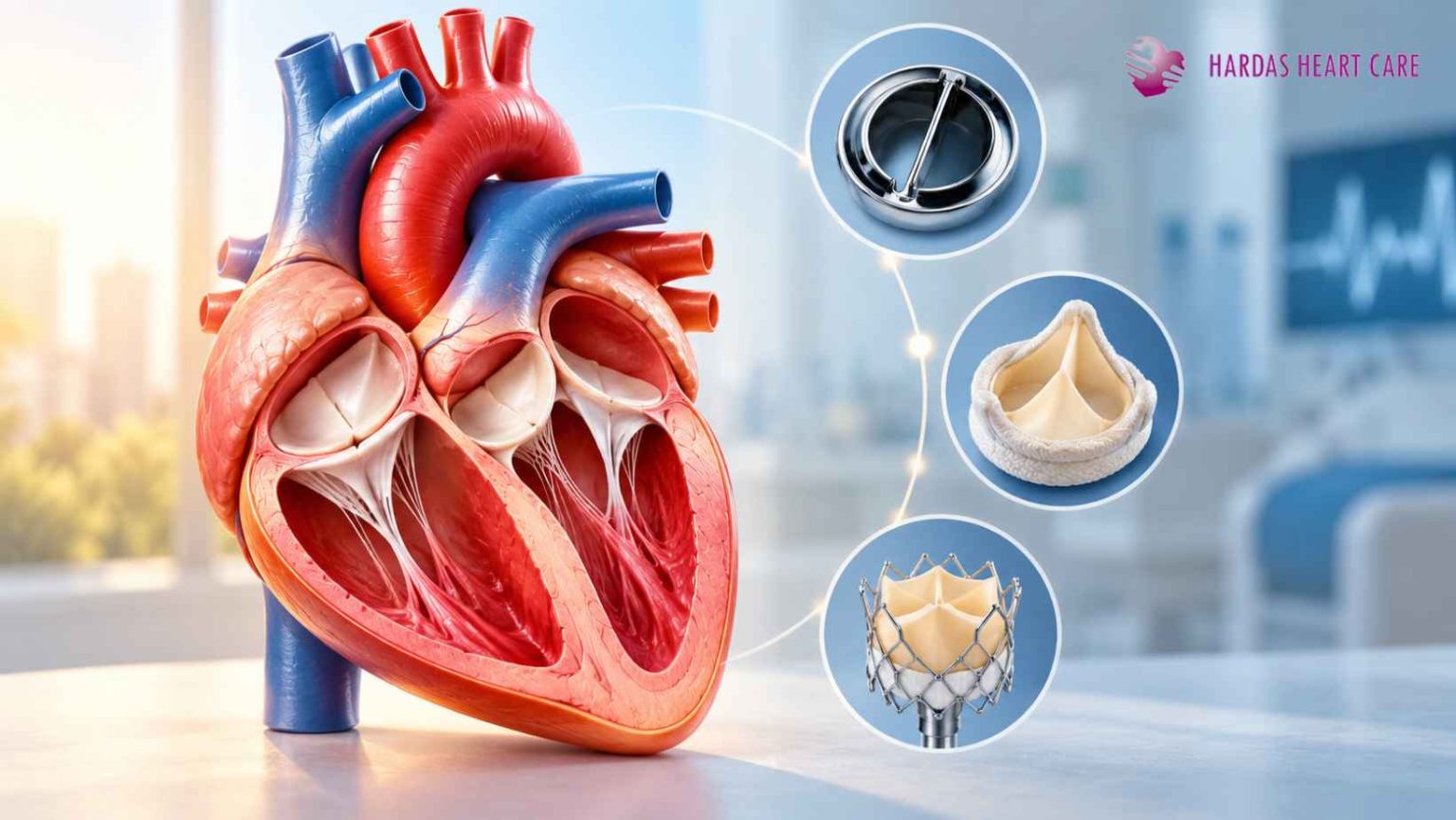
The human heart works continuously to pump oxygen-rich blood throughout the body. Four heart valves play a vital role in this process by opening and closing with every heartbeat, ensuring that blood flows in the correct direction. When one or more of these valves become damaged, narrowed or unable to close properly, the heart may have to work harder to maintain normal circulation.
In some cases, medication and regular monitoring can help manage heart valve disease. However, when the damage becomes severe, heart valve replacement surgery may be recommended to restore effective blood flow and improve quality of life.
Understanding the available procedures, replacement valve types, potential benefits and recovery process can help patients and their families make informed decisions about treatment.
At Hardas Heart Care, raising awareness about heart health and available cardiac treatments is an important step towards encouraging timely medical evaluation.
What Is Heart Valve Replacement Surgery?
Heart valve replacement surgery is a procedure in which a damaged or diseased heart valve is replaced with an artificial or tissue-based valve. The procedure aims to improve blood flow through the heart and reduce the strain caused by a valve that is not functioning properly.
The heart has four valves:
- Aortic valve: Controls blood flow from the left ventricle into the aorta, which carries blood to the body.
- Mitral valve: Regulates blood flow between the left atrium and left ventricle.
- Tricuspid valve: Controls blood flow between the right atrium and right ventricle.
- Pulmonary valve: Regulates blood flow from the right ventricle towards the lungs.
When a valve becomes too narrow or fails to close properly, blood flow can be restricted or move backwards. These problems can increase the workload on the heart and may eventually contribute to heart failure or other complications.
Valve replacement may be recommended when the damage is severe and valve repair is not considered the most appropriate treatment.
What Causes Heart Valve Disease?
Heart valve disease can develop for several reasons. Some people are born with an abnormal valve, while others develop valve problems later in life.
Common causes include:
1. Age-related changes: As people grow older, heart valves may become thickened, stiff or calcified, restricting their movement.
2. Congenital heart conditions: Some individuals are born with valves that have an abnormal structure, making them more likely to develop valve dysfunction.
3. Rheumatic heart disease: Rheumatic fever following certain untreated or inadequately treated infections can damage heart valves, sometimes causing problems years later.
4. Infective endocarditis: An infection affecting the inner lining of the heart or its valves can damage valve tissue and interfere with normal function.
5. Coronary artery disease or previous heart attacks: Damage to the heart muscle can affect the structures supporting certain valves, particularly the mitral valve.
6. Degenerative changes: Over time, the tissues supporting a valve may weaken or deteriorate, causing leakage or other functional problems.
Identifying the underlying cause helps the cardiologist determine the severity of the disease and select an appropriate treatment strategy.
When Is Heart Valve Replacement Necessary?
Not every patient with heart valve disease requires surgery. Mild or moderate valve problems may be managed with regular monitoring, medication to control symptoms or treatment of an underlying condition.
However, valve replacement may be considered when the disease becomes severe, causes significant symptoms or begins to affect heart function.
A cardiologist may recommend further evaluation if a patient experiences:
- Breathlessness during routine activities or while resting.
- Chest discomfort or pain.
- Dizziness, light-headedness or fainting.
- Persistent fatigue or reduced exercise tolerance.
- Swelling in the feet, ankles or legs.
- Palpitations or an irregular heartbeat.
- Evidence of worsening heart function on medical investigations.
Some patients with severe valve disease may have few noticeable symptoms initially. Therefore, clinical assessment and appropriate investigations are important even when symptoms appear mild.
Seek emergency medical attention for sudden severe breathlessness, chest pain, fainting or rapidly worsening symptoms.
What Are the Different Types of Heart Valve Replacement Procedures?
The appropriate procedure depends on which valve is affected, the extent of damage, the patient’s overall health, the anatomy of the heart and the risks associated with surgery.
1. Open-Heart Valve Replacement Surgery
Open-heart surgery is a conventional approach used for many types of valve replacement.
During the procedure, the surgeon accesses the heart through an incision in the chest. In many operations, a heart-lung bypass machine temporarily maintains circulation while the surgeon removes or manages the damaged valve and implants a replacement valve.
The surgical team then checks the new valve’s function and completes the procedure.
Open-heart surgery may be recommended when the valve damage is complex or when the patient requires other cardiac procedures at the same time.
2. Minimally Invasive Heart Valve Surgery
Minimally invasive valve surgery uses smaller incisions than conventional open-heart surgery. Depending on the patient’s condition, the surgeon may access the heart through a smaller opening between the ribs or use specialised instruments and camera-assisted techniques.
Potential advantages for appropriately selected patients may include smaller incisions, less surgical trauma and a shorter recovery period.
However, minimally invasive surgery is not suitable for everyone. The decision depends on the valve involved, the complexity of the disease, the patient’s anatomy and the surgical team’s assessment.
3. Transcatheter Aortic Valve Replacement (TAVR/TAVI)
Transcatheter aortic valve replacement, also known as transcatheter aortic valve implantation, is a less invasive procedure used for selected patients with severe aortic valve stenosis.
Instead of removing the damaged valve through conventional open-heart surgery, the doctor guides a catheter carrying a replacement valve to the heart, commonly through an artery in the groin. The new valve is positioned within the diseased aortic valve.
TAVR/TAVI may be an option for certain patients who are older, have increased surgical risk or meet other clinical criteria. It is not appropriate for every type of valve disease or every patient.
A specialist team evaluates the patient’s health, valve anatomy and individual risks before recommending this procedure.
What Are the Types of Replacement Heart Valves?
Two broad categories of replacement valves are commonly used: mechanical valves and biological, or tissue, valves.
The choice depends on factors such as the patient’s age, lifestyle, medical history, expected valve durability, ability to take long-term medication and preferences.
Mechanical Heart Valves
Mechanical valves are manufactured using durable materials designed to withstand repeated opening and closing over many years.
Advantages:
- Generally offer greater durability than tissue valves.
- May reduce the likelihood of needing another valve replacement because of structural deterioration.
Considerations:
- Usually require lifelong anticoagulant medication to reduce the risk of blood clots.
- Regular blood tests and monitoring may be needed to adjust medication safely.
- The risk of bleeding and interactions with other medicines must be considered.
Mechanical valves may be suitable for patients who prioritise durability and can safely manage long-term anticoagulation.
Biological or Tissue Heart Valves
Biological valves are made from processed animal tissue or, in some cases, donated human tissue.
Advantages:
- Often do not require lifelong anticoagulation solely because of the valve, although other medical conditions may still make anticoagulant treatment necessary.
- May be appropriate for patients for whom long-term anticoagulation presents particular challenges.
Considerations:
- Tissue valves can deteriorate over time.
- Their durability varies according to the valve, the patient’s age and other factors.
- Some patients may require another intervention in the future.
There is no single replacement valve that is best for everyone. Patients should discuss the long-term benefits, limitations and medication requirements of each option with their cardiac team.
How Is Heart Valve Replacement Surgery Performed?
The exact steps vary according to the procedure and the valve being treated. In general, the treatment journey involves the following stages.
Step 1: Preoperative Evaluation
Before surgery, the medical team reviews the patient’s symptoms, medical history, medications and overall health.
Investigations may include:
- Echocardiography: Uses ultrasound to assess valve structure, blood flow and heart function.
- Electrocardiogram (ECG): Records the heart’s electrical activity.
- Blood tests: Evaluate general health, kidney function, blood counts and other relevant parameters.
- Chest imaging: May be recommended to assess the heart and lungs.
- Additional cardiac imaging or coronary assessment: Performed when clinically indicated to help plan the procedure.
These investigations help the team confirm the diagnosis, assess surgical risk and determine the most appropriate approach.
Step 2: Anaesthesia and Preparation
For conventional open-heart valve replacement, general anaesthesia is commonly used, meaning the patient is unconscious during the operation.
The medical team monitors heart rhythm, blood pressure, oxygen levels and other vital parameters throughout the procedure.
The preparation for catheter-based procedures may differ, depending on the patient’s condition and the treatment plan.
Step 3: Replacing the Damaged Valve
During conventional surgery, the surgeon accesses the heart and replaces the damaged valve with the selected prosthetic valve.
For transcatheter procedures, the replacement valve is guided to the required position through a catheter.
The approach depends on the valve involved and the patient’s individual treatment plan.
Step 4: Monitoring After the Procedure
Following surgery, the patient is monitored in a recovery area or intensive care unit, depending on their clinical needs.
The medical team checks heart function, blood pressure, breathing, bleeding, wound healing and other possible complications.
Once the patient’s condition is stable, they begin the next stage of recovery under medical supervision.
What Are the Benefits of Heart Valve Replacement Surgery?
For appropriately selected patients, heart valve replacement can address the underlying mechanical problem affecting blood flow through the heart.
Potential benefits include:
Improved blood flow: Replacing a severely narrowed or malfunctioning valve can help restore more effective circulation.
Relief from symptoms: Patients may experience improvement in breathlessness, fatigue, chest discomfort or reduced exercise tolerance when these symptoms are caused by valve disease.
Reduced strain on the heart: Correcting significant valve dysfunction may help prevent further deterioration caused by abnormal blood flow.
Improved daily functioning: As recovery progresses, some patients find it easier to return to routine activities and physical tasks.
Potential improvement in long-term outcomes: In suitable patients, timely intervention for severe valve disease can improve prognosis.
The extent of improvement varies. Outcomes depend on the severity of the valve disease, the patient’s overall health, the procedure performed and the presence of other medical conditions.
What Are the Risks of Heart Valve Replacement Surgery?
Heart valve replacement is an established treatment, but it is a major medical intervention and carries potential risks.
Possible complications include:
- Bleeding during or after the procedure.
- Infection.
- Abnormal heart rhythms.
- Blood clots or stroke.
- Kidney complications.
- Heart attack or worsening heart failure.
- Problems with the replacement valve, including leakage or dysfunction.
- Complications related to anaesthesia.
The risk profile differs between conventional surgery and catheter-based procedures. It also varies according to age, overall health, the severity of heart disease and other medical conditions.
Before treatment, the cardiologist and cardiac surgeon should explain the expected benefits, individual risks and available alternatives.
Patients should feel comfortable asking questions and discussing concerns before making a decision.
Heart Valve Replacement Surgery Recovery: What Should Patients Expect?
Recovery after valve replacement depends on the type of procedure, the patient’s health before surgery and whether complications occur.
Patients who undergo conventional open-heart surgery generally require a longer recovery period than some patients who undergo less invasive procedures.
Hospital Recovery
During the initial hospital stay, the medical team monitors the patient’s condition and gradually introduces activities such as sitting, standing and walking as appropriate.
Patients receive guidance on wound care, medication use, breathing exercises and activity levels.
The length of hospitalisation varies according to the procedure and the patient’s recovery.
Recovery at Home
After discharge, patients should follow the instructions provided by their medical team.
Important aspects of recovery include:
- Taking prescribed medicines as directed.
- Keeping the surgical wound clean and following wound-care instructions.
- Gradually increasing activity according to medical advice.
- Avoiding heavy lifting and strenuous exercise until cleared by the treating team.
- Attending scheduled follow-up appointments.
- Monitoring for fever, wound redness, unusual discharge, worsening breathlessness or other concerning symptoms.
Patients should not independently stop anticoagulants or alter their medication doses.
Cardiac Rehabilitation
Cardiac rehabilitation may be recommended to help patients rebuild strength, improve physical capacity and develop heart-healthy habits.
A supervised rehabilitation programme may include individualised exercise, education about cardiac health, nutritional guidance and support for managing stress.
The timing and intensity of rehabilitation should be determined by the treating team.
How Long Does It Take to Recover?
Recovery timelines vary considerably.
Some patients undergoing less invasive procedures may resume selected daily activities relatively quickly. Recovery after conventional open-heart surgery often takes several weeks, with complete recovery sometimes requiring a few months.
Patients should return to driving, work, strenuous activity and exercise only when advised by their medical team.
Life After Heart Valve Replacement Surgery
A successful procedure is an important milestone, but long-term care remains essential.
Patients should maintain regular follow-up appointments so that the medical team can monitor the replacement valve and overall heart function.
Long-term care may include:
- Taking prescribed medicines consistently
- Maintaining a balanced, heart-healthy diet.
- Following individualised physical activity recommendations.
- Managing blood pressure, diabetes and cholesterol when applicable.
- Avoiding smoking and seeking support to stop tobacco use.
- Maintaining good oral hygiene and discussing infection prevention with the treating team.
- Informing healthcare professionals and dentists about the replacement valve before relevant procedures.
- Following recommended monitoring for anticoagulant treatment when required.
Patients with mechanical valves generally need lifelong anticoagulation monitoring. Those with tissue valves also require follow-up because the valve can deteriorate over time.
Seek medical advice promptly if new or worsening breathlessness, swelling, palpitations, fever or unusual fatigue develops.
How Can You Prepare for Heart Valve Replacement Surgery?
Preparing for surgery can help patients and their families feel more informed and organised.
Before the procedure, consider the following:
- Understand your diagnosis: Ask which valve is affected and how severe the condition is.
- Discuss available procedures: Understand why a particular surgical or catheter-based approach is being recommended.
- Review medication requirements: Ask about anticoagulants, other prescribed medicines and any instructions before surgery.
- Arrange support at home: Plan for transport, daily assistance and follow-up visits during recovery.
- Understand the expected recovery: Ask when you may be able to walk independently, return to work and resume routine activities.
- Clarify follow-up needs: Understand the monitoring schedule, medication requirements and warning signs that require medical attention.
An informed discussion with the cardiac team can help patients understand the treatment process and prepare for recovery.
Frequently Asked Questions About Heart Valve Replacement Surgery
1. Is heart valve replacement surgery a major operation?
Conventional open-heart valve replacement is a major operation. Some patients may qualify for minimally invasive or catheter-based procedures. The appropriate approach depends on the patient’s condition, the valve involved and the assessment of the cardiac team.
2. How do doctors decide whether a patient needs valve replacement?
Doctors assess symptoms, the severity of valve dysfunction, echocardiography findings, heart function and the patient’s overall health. Replacement may be recommended when the valve is severely damaged and repair or medical management alone is not sufficient.
3. Which is better: a mechanical valve or a tissue valve?
Neither option is universally better. Mechanical valves are generally more durable but usually require lifelong anticoagulation. Tissue valves may avoid the need for lifelong anticoagulation solely because of the valve, but they can deteriorate over time. The decision is individualised.
4. How long does a replacement heart valve last?
Mechanical valves are designed for long-term durability and may last for decades. Tissue valves have a more variable lifespan and may need replacement as they deteriorate. Durability depends on the type of valve, its position and patient-specific factors.
5. Is TAVR/TAVI the same as open-heart valve replacement?
No. TAVR/TAVI is a catheter-based procedure used for selected patients with severe aortic valve stenosis. Conventional open-heart surgery involves surgical access to the heart to replace the damaged valve. The two approaches have different indications, risks and procedural requirements.
6. How long does it take to recover after valve replacement?
Recovery depends on the procedure, the patient’s health and whether complications occur. Many patients need several weeks to recover from conventional surgery, and some require a few months for full recovery. Less invasive procedures may allow a faster recovery in selected cases.
7. Can patients lead a normal life after heart valve replacement?
Many patients return to daily activities and enjoy an improved quality of life after recovery. However, individual outcomes vary, and regular follow-up, medication adherence and lifestyle management remain important.
8. What precautions are necessary after heart valve replacement?
Patients should follow their prescribed medication schedule, attend follow-up appointments, follow wound-care instructions and gradually resume activity according to medical advice. Those taking anticoagulants need appropriate monitoring and should not stop medication without medical guidance.
9. Can heart valve disease be treated without surgery?
Some patients with mild or moderate valve disease can be managed with monitoring, medicines for associated conditions and lifestyle measures. Severe valve disease may require a procedure even when symptoms are limited. The decision depends on clinical findings and specialist evaluation.
Conclusion
Heart valve disease can interfere with the heart’s ability to circulate blood efficiently. When a valve becomes severely narrowed or leaky, timely evaluation is important to determine whether monitoring, medication, valve repair or valve replacement is the most appropriate course of action.
Modern treatment approaches include conventional open-heart surgery, minimally invasive surgery and selected catheter-based procedures. Mechanical and tissue valves offer different advantages, and the choice should reflect the patient’s medical needs and long-term circumstances.
Recovery does not end when the patient leaves the hospital. Medication adherence, cardiac rehabilitation when recommended, regular monitoring and healthy lifestyle habits all contribute to long-term care.
At Hardas Heart Care, we encourage patients to recognise heart-related symptoms, seek timely professional advice and make informed decisions about their cardiac health.
If you have been diagnosed with heart valve disease or have concerns about persistent breathlessness, chest discomfort or reduced exercise tolerance, consult a qualified cardiac specialist for an appropriate evaluation.
Medical disclaimer: This article is intended for general educational purposes and does not replace professional medical advice, diagnosis or treatment. The decision to undergo heart valve surgery must be made after an individual assessment by qualified healthcare professionals.