
The human heart is an extraordinary, tireless engine. It beats approximately 100,000 times each day, pumping vital blood, oxygen, and life-sustaining nutrients to every localized tissue block in the human body. Because the cardiovascular framework operates continuously, its metabolic demands are immensely high.
While public health discussions routinely focus on macronutrient balances, systemic lifestyle adjustments, and regular exercise, the profound biochemical impact of micronutrients is often underemphasized. Emerging global epidemiological data confirms that specific trace elements, inorganic salts, and essential vitamins dictate structural integrity, bioelectrical stability, and inflammatory control within our blood vessels and cardiac muscle.
Understanding this sub-cellular chemistry can feel overwhelming. When designing a preventive care strategy, working alongside a clinical expert like the best heart specialist in Pune ensures your nutritional intake aligns with your specific biochemical metrics. Let us dive deep into the essential vitamins and minerals that fuel cardiovascular health, explore their scientific mechanisms, and discover how to optimize your daily dietary intake.
1. The Cellular Guardians: Essential Cardiovascular Vitamins
Vitamins operate as critical regulatory organic compounds. They act as biological catalysts, shielding structural pathways from oxidative decay and regulating enzymatic processes.
Vitamin C: Endothelial Protection and Collagen Integrity
Widely celebrated for its robust antioxidant capacity, Vitamin C is a cornerstone of vascular defense. Chronic oxidative stress triggers lipid peroxidation, forcing plaque accumulation within arterial channels. Vitamin C neutralizes these circulating free radicals, mitigating early-stage damage. Furthermore, it serves as an absolute prerequisite for collagen biosynthesis. Collagen forms the structural scaffolding of arterial walls, keeping vessels pliable and resilient against fluctuating systemic pressure.
Vitamin D: The Systemic Pressure Regulator
Famously dubbed the “sunshine vitamin,” Vitamin D behaves more like a systemic hormone than a standard nutrient. It plays an active role in regulating the renin-angiotensin-aldosterone system (RAAS), which controls systemic blood pressure. Clinical deficiencies are heavily correlated with chronic arterial stiffness, endothelial dysfunction, and increased risks of sustained hypertension. Ensuring stable blood levels supports proper myocardial cell growth and mitigates global vascular inflammation.
Vitamin K: Preventing Arterial Calcification
Vitamin K, particularly the K2 matrix, is indispensable for proper calcium distribution. Without adequate Vitamin K levels, calcium can easily precipitate out of the bloodstream and lodge directly into the elastic layers of blood vessels. This arterial calcification hardens the pathways, forcing the heart to pump against higher resistance. Vitamin K activates matrix Gla protein (MGP), a powerful local inhibitor of vascular calcification, ensuring calcium is directed into bone tissue rather than coronary arteries.
2. The Bioelectric Conductor: Essential Minerals for Heart Rhythm
Inorganic salts and minerals act as the electrical switches of the cardiovascular system. They establish transmembrane potentials, drive muscle contraction cycles, and balance fluid distribution.
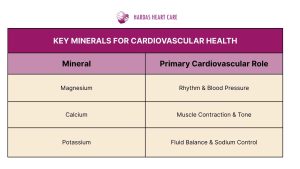
Magnesium: The Ultimate Rhythm Stabilizer
Magnesium participates in over 300 distinct biochemical reactions, with a heavy concentration of tasks focused on the myocardium. It maintains cell membrane stability and regulates the active transport of calcium and potassium ions across cellular walls. This specific ion transport dictates electrical nerve impulses and muscular contractions, protecting the body against debilitating arrhythmias. Furthermore, magnesium encourages smooth muscle relaxation within blood vessels, helping lower systemic blood pressure.
Calcium: Contraction, Tone, and Tight Control
While calcium is structurally famous for skeletal health, it also acts as a primary signaling molecule for cardiac muscle contractions. When calcium ions enter myocardial cells through specialized channels, they trigger the mechanical sliding of muscle fibers, producing a coordinated heartbeat. However, calcium levels require meticulous regulation. Excess, unmanaged calcium drives vascular tightening and hypertension, highlighting why expert clinical oversight is invaluable when managing supplement routines.
Potassium: Countering Sodium and Protecting Vessels
Potassium is a powerful intercellular fluid regulator. It works in direct tandem with dietary sodium to maintain global fluid equilibrium. Modern diets are notoriously oversaturated with sodium, which prompts cellular fluid retention, increases blood volume, and drives up blood pressure. Potassium counters this by promoting renal sodium excretion and directly relaxing the smooth muscular lining of major arteries. Consistently hitting your recommended daily potassium benchmarks significantly lowers long-term stroke risks.
3. Beyond Micronutrients: The Anti-Inflammatory Power of Omega-3s and CoQ10
While not classified as standard vitamins or minerals, other essential dietary components drastically modify cardiovascular risks.
- Omega-3 Fatty Acids: Sourced from marine oils and select seeds, these long-chain polyunsaturated fatty acids are potent anti-inflammatory agents. They lower circulating serum triglycerides, decrease platelet aggregation to prevent dangerous blood clots, and minimize the risk of sudden cardiac death from erratic arrhythmias.
- Coenzyme Q10 (CoQ10): Positioned inside cellular mitochondria, CoQ10 is a vital component of the electron transport chain, generating the immense cellular energy required for continuous myocardial contractions. It also acts as a fat-soluble antioxidant, protecting cellular membranes from local oxidative destruction.
4. Practical Dietary Strategies for Ultimate Heart Care
Achieving optimal nutritional health does not require complicated formulas. Focus on integrating whole, unprocessed, nutrient-dense foods into your daily meals.
- Build a Colorful Plate: Prioritize deep leafy greens, structural root vegetables, and bright citrus fruits. This ensures a broad delivery of Vitamin C, potassium, and magnesium.
- Incorporate Healthy Fats: Introduce wild fish, walnuts, chia seeds, and unrefined oils to keep your omega-3 profiles and cellular membranes highly resilient.
- Choose Intact Whole Grains: Swap out heavily refined starches for complex, fiber-rich alternatives like oats, quinoa, and millets to promote metabolic health and control cholesterol absorption.
- Practice Smart Supplementation: When dietary intake falls short, target bioavailable mineral options, such as chelated compounds, to guarantee efficient absorption without causing digestive issues.
5. The Clinical Connection: Why Professional Guidance Matters
Every individual possesses a highly unique metabolic blueprint. Factors such as underlying genetics, specific daily stressors, pre-existing chronic conditions, and current prescription medications fundamentally alter how your body processes nutrients. For example, certain blood pressure therapies cause the body to retain potassium, rendering high-dose potassium supplements hazardous. Conversely, other diuretic therapies deplete vital magnesium reserves rapidly.
Self-prescribing high-dose supplements without baseline diagnostics can inadvertently create biological imbalances, placing unnecessary stress on your cardiovascular system. Partnering with a dedicated clinic allows for accurate serum testing, detailed risk assessments, and targeted nutritional prescriptions tailored explicitly to your body’s demands.
If you are looking to build a highly optimized, bulletproof strategy for long-term wellness, scheduling a comprehensive assessment with the best heart specialist in Pune bridges the gap between basic dietary choices and advanced cardiovascular science. Personalized, proactive care is the absolute golden standard for protecting your heart’s vital journey for decades to come.