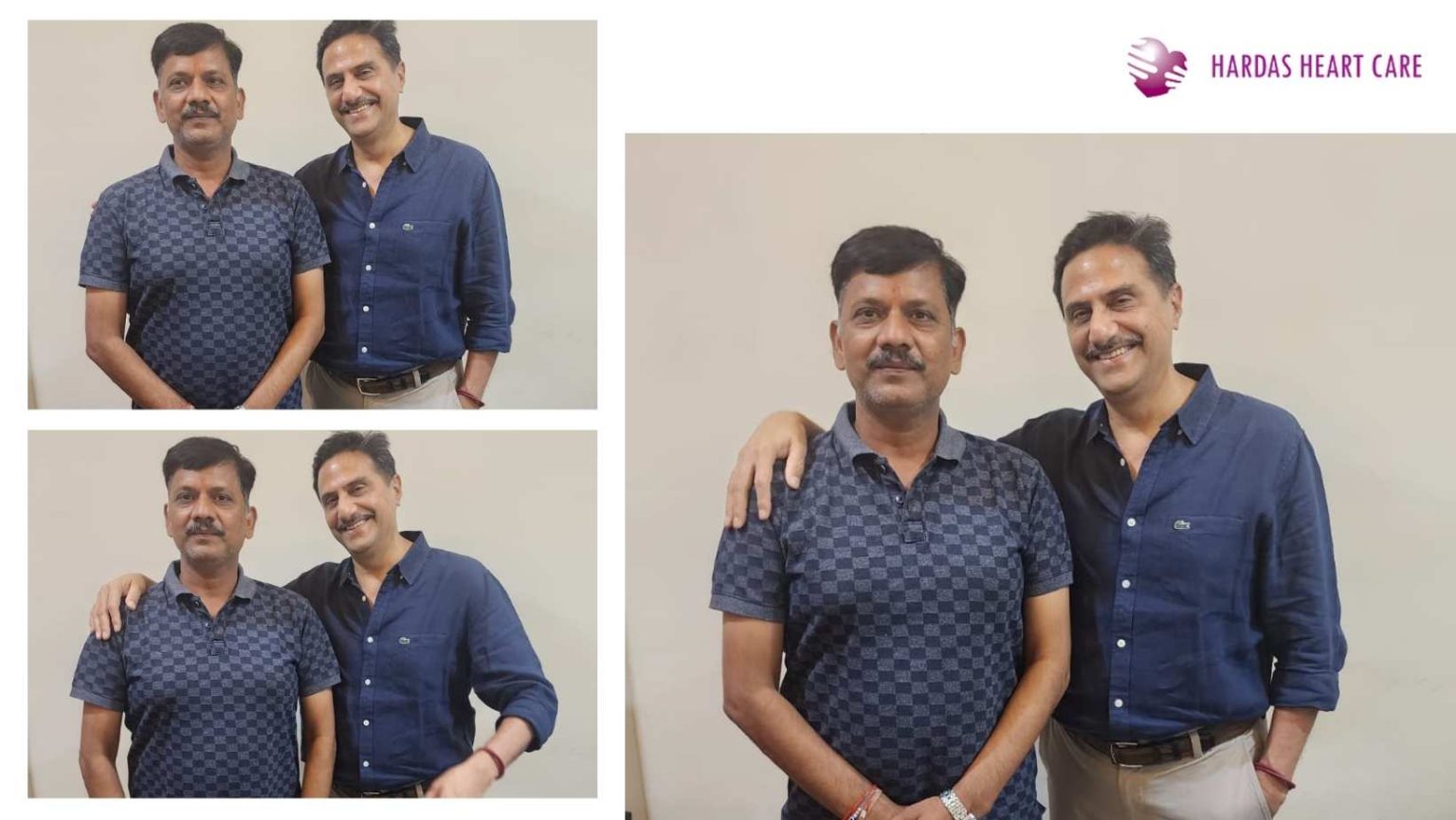
Some medical journeys go far beyond diagnosis and treatment—they become a testament to what modern medicine, teamwork, and human resilience can achieve.
As shared by Dr. Suhas Hardas, this was not merely a case study.
It was a meticulously managed terminal heart condition, handled with the singular goal of giving a young patient a second chance at life.
It was a meticulously managed terminal heart condition, handled with the singular goal of giving a young patient a second chance at life.
Understanding the Beginning: A Severely Failing Heart
Back in 2011, the patient presented with Dilated Cardiomyopathy (DCM)—a condition where the heart becomes enlarged and weak.
What made this case particularly critical was
- Ejection Fraction of just 10% (normal is 55–70%)
- The heart’s contraction and relaxation phases appeared almost identical
- Severely reduced blood flow to the body
- Progressive impact on multiple organs
In simple terms, the heart had almost lost its ability to pump effectively.
At this stage, survival itself becomes uncertain without advanced intervention.
The Bridge to Life: Years of Careful Management
Between 2011 and 2016, the focus was clear:
Keep the patient stable until a heart transplant becomes possible.
This required:
- Aggressive, carefully calibrated medical therapy
- Continuous monitoring and follow-ups
- Strategic planning for transplantation
At the time, heart transplant programs in cities like Pune were still evolving.
So, the patient was enrolled in a transplant program in Mumbai.
This phase highlights a crucial reality—
Advanced cardiac care is not a one-time treatment, but a sustained, multidisciplinary effort.
The Turning Point: Heart Transplant & The Green Corridor
In 2016, the defining moment arrived.
Through coordinated efforts between:
– Fortis Hospital Mulund
– Dr. Anvay Mure
– Dr. Hardas and his team
…the patient successfully underwent a heart transplant.
A key highlight was the creation of a Green Corridor—
a special traffic-free route that ensures the donor heart reaches the recipient within critical time limits.
This moment reflects the power of:
- Medical expertise
- Hospital coordination
- And most importantly—organ donation
A New Life: Recovery Beyond Expectations
Post-transplant, the patient’s transformation was remarkable:
- Exercise capacity returned to near-normal
- Quality of life improved dramatically
- He resumed daily activities like a healthy individual
This is the true promise of advanced cardiac care—
Not just survival, but restoration of life.
A New Challenge: Post-Transplant Complication
However, medicine is never static.
As known in cardiology, transplanted hearts are more prone to developing coronary artery disease.2021, the patient developed:
Critical narrowing in a major heart artery (ostial lesion)
Once again, timely intervention made the difference.
- A successful angioplasty was performed
- Blood flow was restored
- The patient recovered and returned to normal life yet again
The Bigger Lesson: Lifetime Cardiac Care Matters
This journey teaches us something profound:
Severe heart disease is not the end— if managed with precision, patience, and long-term vision.
Key takeaways:
- Early diagnosis and sustained treatment can extend life significantly
- Multidisciplinary collaboration is essential
- Advanced procedures like transplants require seamless coordination
- Post-treatment care is just as critical as the primary intervention
The Role of Organ Donation: A Life Passed Forward
None of this would have been possible without organ donation.
One donor heart didn’t just save a life— it restored a future.
This story reinforces an important message:
Organ donation is not just a medical act—it is a legacy of life.
A Collaborative Victory in Medicine
This case stands as a powerful example of:
- Clinical expertise
- Strategic decision-making
- Institutional collaboration
With key contributions from:
- Fortis Hospital Mulund
- Dr. Anvay Mure
- And the dedicated team led by Dr. Suhas Hardas, along with Dr. Hardas Ma’am and Dr. Shalaka
It also aligns with previously documented clinical insights shared by Fortis—highlighting how collaborative decision-making played a central role in saving this life.
Conclusion: Turning the “Impossible” Into Reality
Today, the patient continues to do well—a living example of what is possible when:
- Medicine is proactive
- Teams work in sync
- And care doesn’t stop at diagnosis
As doctors, this journey reminds us:
Even in the most severe conditions, hope can be engineered—with the right approach.