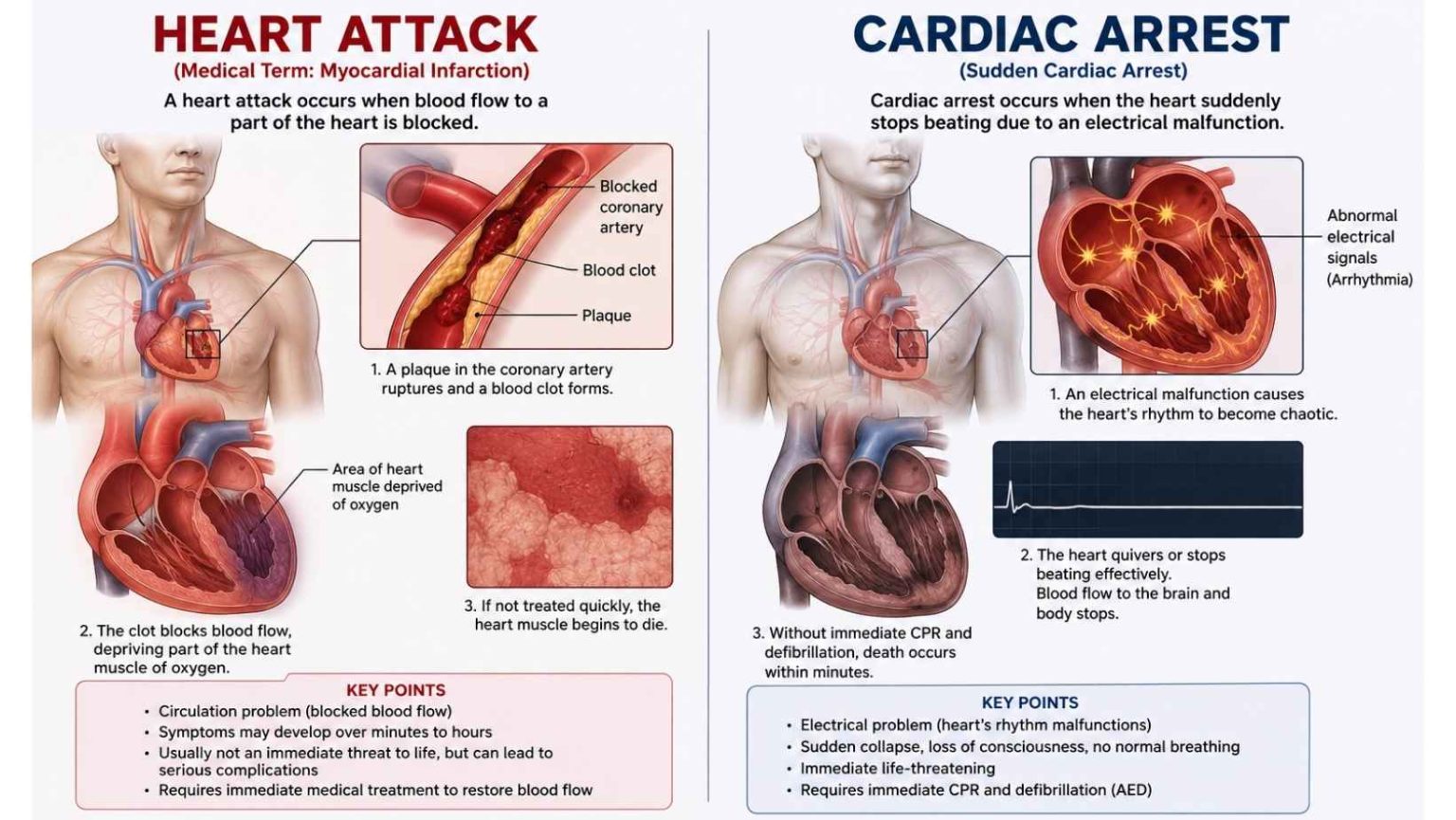
Many people use the terms cardiac arrest and heart attack as if they mean the same thing. They do not. Both conditions are serious medical emergencies. However, they affect the heart in different ways and require different responses. Understanding the difference between a heart attack and cardiac arrest can help you recognize warning signs early and take life-saving action when every second counts.
In this guide, Dr. Suhas Hardas explains the key differences, symptoms, causes, treatment options, and prevention strategies for both conditions.
Quick Answer: Cardiac Arrest vs Heart Attack
A heart attack happens when blood flow to part of the heart muscle becomes blocked.
A cardiac arrest happens when the heart suddenly stops pumping blood effectively due to an electrical malfunction.
In simple terms:
- A heart attack is a circulation problem.
- A cardiac arrest is an electrical problem.
- A heart attack may sometimes trigger a cardiac arrest.
- Cardiac arrest causes immediate collapse and loss of consciousness.
- Heart attack symptoms often develop gradually over minutes or hours.
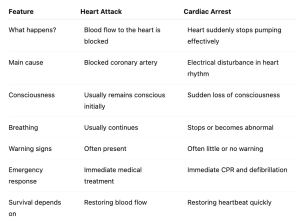
Cardiac Arrest vs Heart Attack: Comparison Table
What Is a Heart Attack?
A heart attack, also called myocardial infarction, occurs when blood supply to part of the heart muscle becomes blocked.
The blockage usually develops because fatty deposits, cholesterol, and other substances build up inside the coronary arteries. When a plaque ruptures, a blood clot can form and stop blood flow.
Without oxygen-rich blood, the affected heart muscle begins to suffer damage.
The good news is that prompt treatment can restore blood flow and reduce long-term damage to the heart.
Common Symptoms of a Heart Attack
Heart attack symptoms may include:
- Chest pain or pressure
- Tightness in the chest
- Pain spreading to the arm, shoulder, neck, jaw, or back
- Shortness of breath
- Sweating
- Nausea
- Dizziness
- Unusual fatigue
Symptoms can vary between individuals, especially in women, older adults, and people with diabetes.
What Is Cardiac Arrest?
Cardiac arrest occurs when the heart suddenly stops pumping blood effectively.
Unlike a heart attack, cardiac arrest is caused by a problem in the heart’s electrical system. The heart develops a dangerous rhythm that prevents normal pumping action.
As a result:
- Blood stops reaching the brain.
- Oxygen supply to vital organs stops.
- The person collapses suddenly.
- Breathing becomes absent or abnormal.
- Loss of consciousness occurs within seconds.
Without immediate treatment, cardiac arrest can become fatal within minutes.
Common Symptoms of Cardiac Arrest
Signs of cardiac arrest include:
- Sudden collapse
- Loss of consciousness
- No normal breathing
- No response to stimulation
- Absence of a detectable pulse
Because cardiac arrest often happens without warning, rapid action is critical.
What Causes a Heart Attack?
The most common causes include:
- Coronary artery disease
- Cholesterol buildup in arteries
- Blood clot formation
- High blood pressure
- Diabetes
- Smoking
- Obesity
- Physical inactivity
- Family history of heart disease
These factors increase the risk of artery blockage and reduced blood flow to the heart.
What Causes Cardiac Arrest?
Cardiac arrest is often linked to abnormal heart rhythms known as arrhythmias.
Risk factors include:
- Previous heart attack
- Heart failure
- Structural heart disease
- Inherited heart conditions
- Electrical abnormalities of the heart
Although some causes are genetic, many risk factors can be reduced through proper medical care and a healthy lifestyle.
Can a Heart Attack Cause Cardiac Arrest?
Yes.
A severe heart attack can damage the heart muscle and interfere with the heart’s electrical system. This disruption may trigger a dangerous arrhythmia that leads to cardiac arrest. However, not every heart attack results in cardiac arrest.
Early diagnosis and treatment significantly reduce this risk.
Emergency Response: What Should You Do?
If You Suspect a Heart Attack
- Call emergency medical services immediately.
- Keep the person calm.
- Help them sit comfortably.
- Follow emergency instructions while waiting for medical assistance.
Doctors may use medications, angioplasty, or other procedures to restore blood flow to the heart.
If You Suspect Cardiac Arrest
- Call emergency medical services immediately.
- Begin CPR if trained.
- Use an Automated External Defibrillator (AED) if available.
- Continue CPR until medical professionals arrive.
Rapid CPR helps maintain blood flow to the brain and vital organs until advanced care is available.
How to Reduce Your Risk
Many heart-related emergencies can be prevented through healthy lifestyle choices.
Heart Health Tips
- Avoid smoking and tobacco products
- Control blood pressure
- Manage cholesterol levels
- Maintain a healthy weight
- Exercise regularly
- Eat a heart-friendly diet
- Manage diabetes effectively
- Limit excessive alcohol intake
- Schedule regular heart check-ups
- Follow prescribed medications
Prevention remains one of the most effective tools for reducing the risk of both heart attack and cardiac arrest.
When Should You See a Cardiologist?
You should seek medical evaluation if you experience:
- Chest discomfort
- Shortness of breath
- Palpitations
- Unexplained dizziness
- Fainting episodes
- Family history of heart disease
Early assessment can identify risk factors before they become life-threatening emergencies.
Frequently Asked Questions (FAQs)
Is cardiac arrest the same as a heart attack?
No. A heart attack is caused by blocked blood flow to the heart, while cardiac arrest occurs when the heart suddenly stops pumping effectively due to an electrical problem.
Which is more dangerous?
Both are medical emergencies. However, cardiac arrest is immediately life-threatening because blood flow to the brain and organs stops completely.
Can someone survive cardiac arrest?
Yes. Immediate CPR, early defibrillation, and rapid medical treatment can significantly improve survival rates.
What is the most common symptom of a heart attack?
Chest pain, pressure, or discomfort is the most common symptom. Some people may also experience shortness of breath, nausea, or unusual fatigue.
Can healthy people experience cardiac arrest?
Yes. Certain inherited heart conditions and electrical abnormalities can cause cardiac arrest even in people who appear healthy.
Final Thoughts
Knowing the difference between cardiac arrest vs heart attack can help save a life.
A heart attack occurs when blood flow to the heart is blocked. Cardiac arrest occurs when the heart suddenly stops pumping blood effectively. While they are different conditions, both require immediate medical attention. Recognizing symptoms early, seeking prompt treatment, and maintaining a heart-healthy lifestyle can significantly improve outcomes.
If you have concerns about your heart health or risk factors for cardiovascular disease, consult Dr. Suhas Hardas for expert evaluation, preventive care, and personalized treatment guidance.
Medical Disclaimer: This article is intended for educational purposes only and should not replace professional medical advice, diagnosis, or treatment. Always consult a qualified healthcare professional for medical concerns.