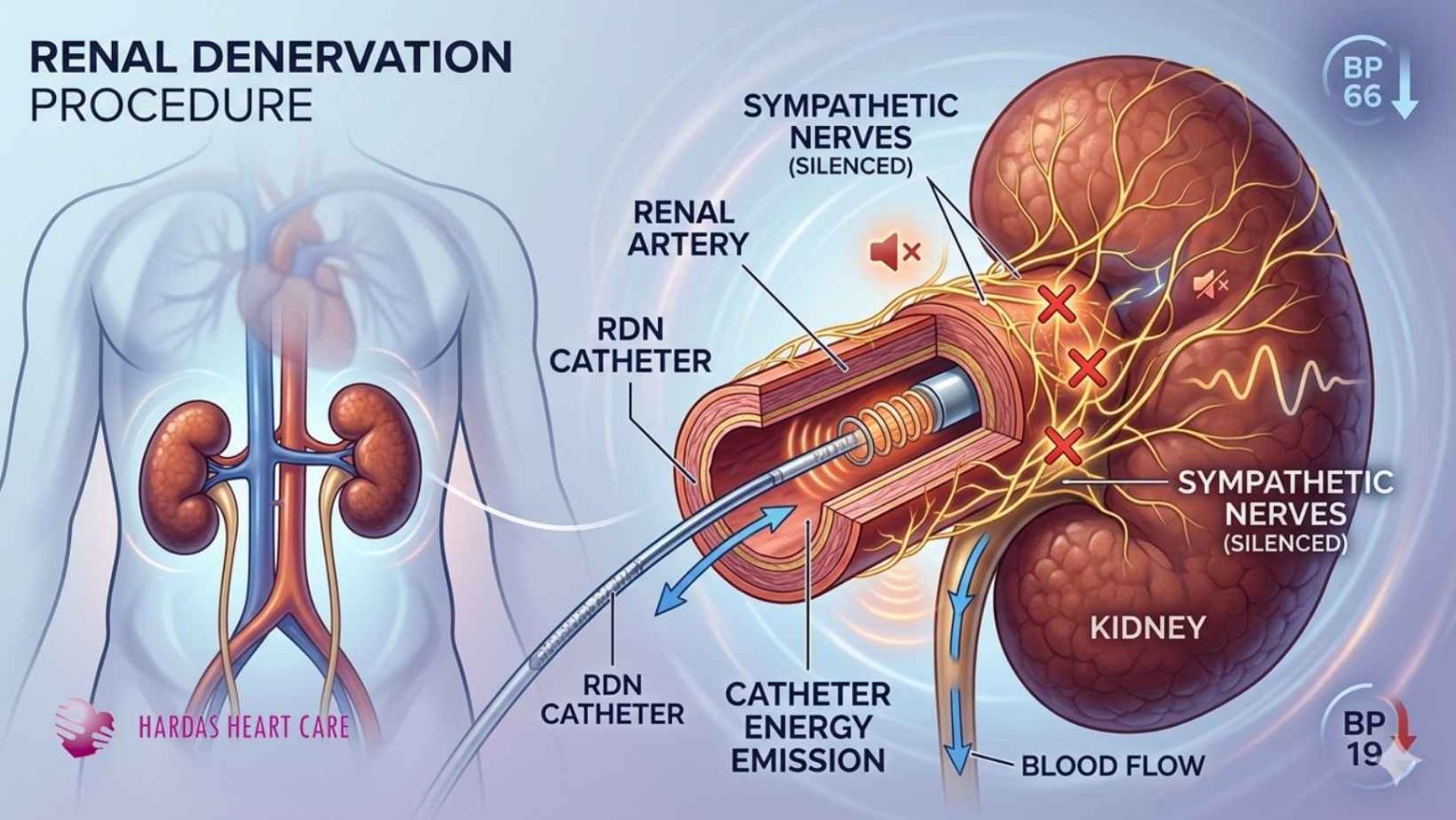
High blood pressure, or hypertension, is often called a “silent killer.” For millions of people, a daily cocktail of pills, a low-salt diet, and regular exercise are enough to keep their numbers in a safe zone. But what happens when you are already taking three, four, or even five different blood pressure medications, and your numbers still refuse to budge?
If this sounds like your reality, you might be dealing with a medical condition known as resistant hypertension. Fortunately, modern medicine has developed a groundbreaking, minimally invasive option known as Renal Denervation (RDN).
To help make sense of this revolutionary technology, we will break down everything you need to know about this procedure. We’ll also cover advice from Dr. Suhas Hardas, recognized as a top cardiologist in Pune, who helps patients navigate advanced options for heart and vascular health.
What is Renal Denervation?
To understand this treatment, it helps to know how your body regulates blood pressure. Your brain and your kidneys are constantly talking to each other using a dedicated network of nerves called the sympathetic nervous system.
When a person has chronic high blood pressure, these nerves often become hyperactive. They constantly signal the kidneys to retain salt and water, while simultaneously signaling the blood vessels to stiffen and narrow. This over-activation creates a vicious cycle that drives your blood pressure up.
Renal Denervation is a minimally invasive, catheter-based procedure that delivers controlled energy to safely silence these overactive nerves. By calming the communication between the brain and the kidneys, the body can naturally relax its blood vessels, resulting in a sustained drop in blood pressure.
Why is This Procedure Used and Recommended?
Doctors do not recommend renal denervation for someone who just discovered they have mild high blood pressure. Instead, it serves as an adjunctive (supportive) therapy for very specific groups of people:
- Resistant Hypertension: Patients whose blood pressure stays unsafely high despite taking maximum doses of three or more medications.
- Medication Intolerance: People who experience severe, unmanageable side effects from blood pressure pills, such as extreme fatigue, dizziness, chronic coughing, or kidney strain.
- High Cardiovascular Risk: Hypertensive patients who face an imminent risk of major health issues, such as a heart attack, stroke, or heart failure, due to unstable blood pressure.
As Dr. Suhas Hardas emphasizes to his patients in Pune, the primary benefit of this procedure is its “always-on” effect. Unlike medications that wear off if you miss a dose or take them late, denervated nerves remain quiet around the clock, providing steady protection against morning spikes in blood pressure.
Step-by-Step: What Happens During the Procedure?
The thought of an advanced medical procedure can feel intimidating, but renal denervation is straightforward, smooth, and does not involve deep surgical incisions. Here is exactly what you can expect:
1. Preparation and Sedation
The procedure takes place in a specialized hospital room called a Cardiac Catheterization Laboratory (Cath Lab). You will be given a local numbing medication at the entry site, along with a mild sedative through an IV line to keep you relaxed, comfortable, and pain-free throughout the process.
2. Accessing the Arteries
An interventional cardiologist makes a tiny puncture, usually in the groin area, to access the femoral artery. A very thin, flexible tube called a catheter is carefully threaded through your blood vessels until it reaches the renal arteries, which supply blood to your kidneys.
3. Precision Mapping
Using real-time X-ray imaging and a safe contrast dye, the doctor visualizes the exact layout and structure of your kidney arteries to ensure perfect catheter placement.
4. Calming the Nerves
Once the catheter is in position, it delivers targeted energy to the inside walls of the artery where the nerves live. Depending on the specific system used, this is done in one of two ways:
- Radiofrequency Energy: Tiny pulses of heat energy are applied in a spiral pattern to quiet the nerves.
- Ultrasound Energy: Gentle sound waves are used to achieve the same result while a built-in cooling system protects the delicate lining of your artery.
5. Recovery and Wrap-Up
The entire process takes about 1 to 2 hours. Once finished, the catheter is removed, and gentle pressure is applied to the groin puncture to prevent bleeding. Most patients spend a few hours in a recovery room and are discharged either the same evening or after a single overnight stay for observation.
Efficacy: What Results Should You Expect?
It is crucial to understand that renal denervation is not a magical overnight cure that will immediately allow you to throw away all your pills. Instead, think of it as a tool that resets your body’s baseline numbers.
The Real-World Data
Large-scale global clinical trials have tracked patients for up to three years following the procedure. The data shows:
- Consistent Drop in Numbers: Patients experience an average drop of 15 to 20 mmHg in their top blood pressure number (systolic) when measured in a doctor’s office.
- Fewer Medications: Many patients find that they can safely reduce the number or the dosage of the blood pressure medications they take daily.
- Protection Against Complications: A long-term tracking study showed a 43% reduction in sudden, dangerous emergency room visits caused by acute hypertensive spikes.
Your body requires a little time to adjust to the nerve changes. While some drop in blood pressure is visible within a few weeks, the full, stable benefits of the procedure typically develop over a period of 2 to 3 months.
Is It Safe? Understanding the Risks
Extensive medical data confirms that renal denervation has a robust safety profile. Because it is a minimally invasive procedure, the overall risk of a serious complication is low (less than 1%).
However, no medical procedure is completely risk-free. Potential risks include:
- Bruising, soreness, or minor bleeding where the catheter entered the groin.
- Temporary, minor damage to the blood vessel wall, which can be easily managed during the procedure.
- A rare chance of narrowing of the kidney artery (renal artery stenosis), occurring in fewer than 0.2% of cases globally.
Studies have verified that the procedure does not harm long-term kidney function or reduce the blood flow necessary for your kidneys to filter waste efficiently.
Cost of Renal Denervation in India
Because renal denervation requires advanced, specialized single-use catheters and highly precise generator equipment, it is considered a premium medical technology.
In India, the total cost for a renal denervation treatment typically ranges between ₹3,50,000 to ₹5,50,000 (INR). This estimate can fluctuate based on:
- The specific hospital facility and room category selected.
- The type of FDA-approved technology used (Radiofrequency vs. Ultrasound).
- Any routine pre-procedural diagnostics and post-procedure care required.
Many insurance providers are beginning to recognize this treatment for severe, drug-resistant cases because preventing a stroke or heart failure saves significant medical costs down the road. It is always wise to consult with your hospital’s administrative team regarding corporate coverage or insurance approval options.
Final Thoughts: Is Renal Denervation Right for You?
If you are tired of dealing with uncontrolled blood pressure and the constant anxiety of a potential cardiovascular emergency, renal denervation offers a proven path forward. It provides a reliable safety net that works silently in the background, every single second of the day.
However, proper patient selection is the ultimate key to a successful outcome. If you are exploring this treatment, your first step should be an in-depth consultation with an expert who can accurately evaluate your cardiovascular health.
Frequently Asked Questions (FAQ)
1. Does the procedure cause any pain?
You will not feel any pain during the procedure because you will receive local numbing medication and a sedative to keep you comfortable. Some patients report mild back or abdominal warmth during the brief moments when the energy is applied, but this passes quickly. You may experience mild soreness at the groin site for a few days after the procedure.
2. Can I completely stop taking my blood pressure medications after the procedure?
For most patients with severe resistant hypertension, the goal of renal denervation is to lower blood pressure into a safe range and reduce the overall pill burden, rather than eliminating all medications. Your cardiologist will monitor your numbers over the months following your procedure and safely lower your prescription doses as your baseline blood pressure drops.
3. How long do the effects of renal denervation last?
The effects appear to be highly durable. Clinical tracking data following patients for three years shows that the reduction in blood pressure is sustained and can even improve over time as the blood vessels adapt to lower stress levels.
4. What is the recovery time after the treatment?
Most patients can return to light, daily activities within 2 to 3 days after the procedure. You should avoid heavy lifting, strenuous exercise, or intense physical workouts for about one week to give the puncture site in your groin ample time to heal completely.
Seeking Expert Guidance in Pune?
If you or a family member are struggling to manage high blood pressure despite taking multiple medications, consider speaking to a specialist. For those living in Maharashtra, consulting an expert like Dr. Suhas Hardas, a top cardiologist in Pune, can help you determine if you are an ideal candidate for this innovative, life-saving treatment.