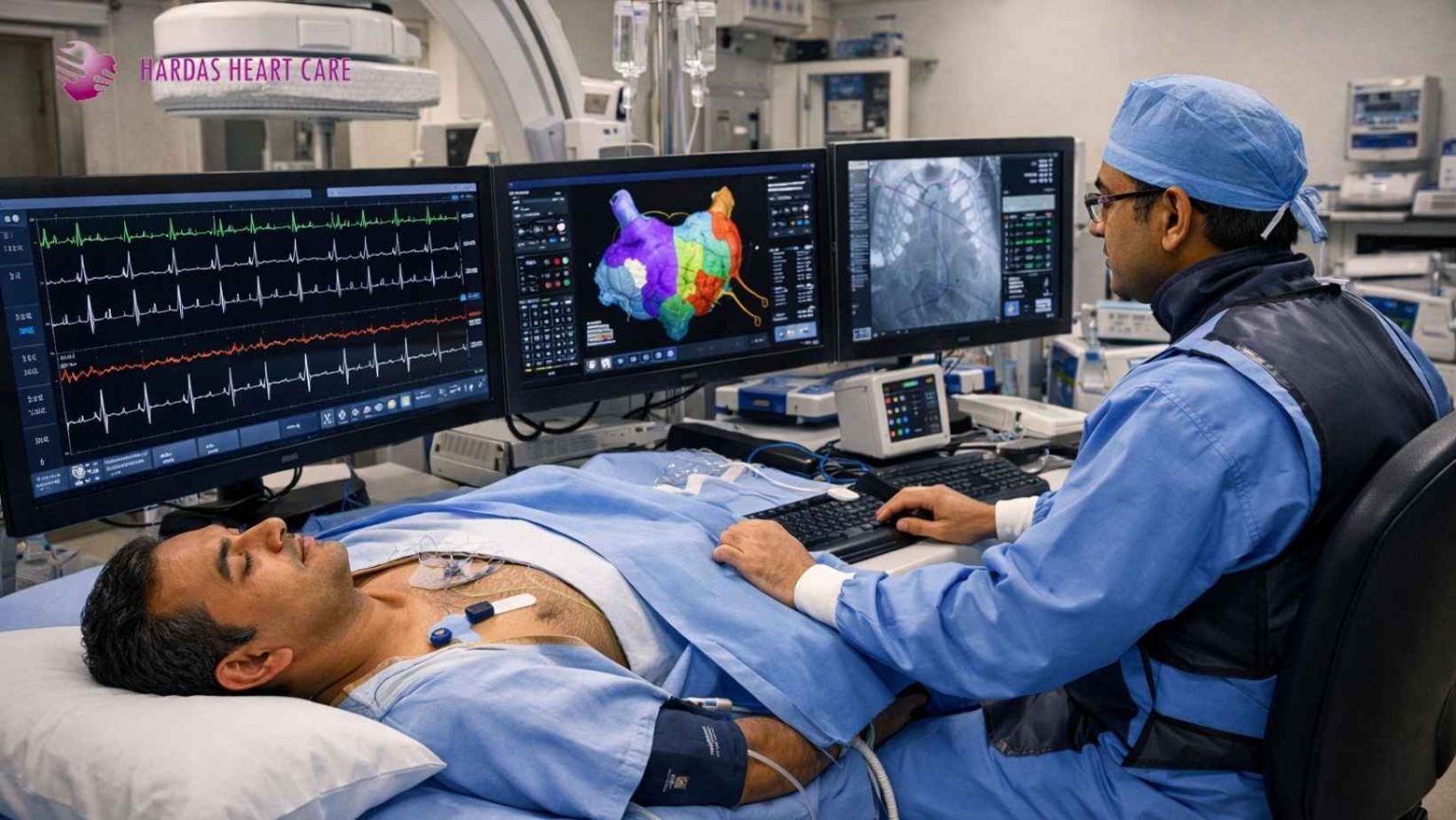
Heart rhythm problems can be confusing, frightening, and often misunderstood. You may feel fine one moment and suddenly experience palpitations, dizziness, or fainting the next. When routine tests like ECG or Holter monitoring fail to explain these symptoms, doctors may recommend a specialized procedure known as an EP study.
If you are searching for reliable information about an EP study in Pune, this detailed guide will help you understand what the test is, why it is done, how it works, and what to expect before, during, and after the procedure. This blog is written to answer common patient questions clearly and confidently, helping you make informed decisions about your heart health.
What Is an EP Study?
An electrophysiology study (EP study) is a specialized heart test that evaluates the electrical system of the heart. While many heart tests focus on structure and blood flow, an EP study looks specifically at how electrical signals travel through the heart muscle.
Your heartbeat is controlled by electrical impulses that move through precise pathways. If these signals misfire, travel too fast, too slow, or take the wrong route, abnormal heart rhythms called arrhythmias can occur. An EP study helps doctors identify exactly where these rhythm problems start and how they behave.
This makes an EP study one of the most accurate tests for diagnosing complex heart rhythm disorders.
How Does Electrophysiology Work?
Electrophysiology is the branch of cardiology that studies the electrical activity of the heart. Instead of observing electrical signals from outside the body like an ECG, electrophysiology allows doctors to record signals from inside the heart itself.
During an EP study, thin flexible wires called catheters are gently guided through blood vessels into the heart. These catheters act like sensors, measuring electrical impulses from different heart chambers in real time.
This internal mapping gives doctors precise information that cannot be obtained through surface tests alone.
What Is Electrophysiology Used For?
Electrophysiology studies are used to diagnose and manage several heart rhythm conditions. These include unexplained palpitations, fainting episodes, rapid heartbeats, slow heartbeats, and irregular rhythms that do not show clearly on routine testing.
An EP study in Pune is often recommended when symptoms persist despite normal ECGs or when medication has not worked as expected. The test also helps determine whether procedures such as catheter ablation, pacemaker implantation, or ICD placement are necessary.
Why Is an EP Study Important?
Heart rhythm disorders can range from harmless to life-threatening. Some arrhythmias increase the risk of stroke, heart failure, or sudden cardiac arrest if left untreated.
An EP study allows cardiologists to:
- Identify the exact cause of abnormal heart rhythms
- Assess the severity of electrical disturbances
- Decide the safest and most effective treatment
- Prevent future complications
For many patients, this test provides clarity after months or years of unexplained symptoms.
EP Study in Pune: Test Details
When undergoing an EP study in Pune, the procedure is performed in a highly controlled cardiac catheterization laboratory. The environment is sterile, technologically advanced, and monitored by a trained cardiac team.
The test is minimally invasive and does not require open surgery. Most patients are able to go home the same day or after a short hospital stay.
How Does the EP Study Test Work?
The EP study begins with numbing a small area, usually near the groin or sometimes the arm. A thin catheter is inserted into a blood vessel and guided to the heart using imaging technology. Once in position, the catheters record the heart’s electrical signals. Doctors may also stimulate the heart gently to observe how it responds under controlled conditions. This helps identify abnormal circuits or trigger points causing arrhythmias.
The process is carefully monitored to ensure patient safety and comfort throughout the test.
How Do I Prepare for an Electrophysiology Study?
Preparation for an EP study is straightforward but important. Your doctor will give specific instructions based on your medical condition and medications. You may be asked to stop certain heart medicines a few days before the test, as they can affect results. Fasting for several hours before the procedure is usually required.
Blood tests, ECGs, or imaging studies may be done beforehand to ensure you are ready for the procedure. Your medical team will explain everything clearly so you feel comfortable and informed.
What to Expect on the Date of an EP Study
On the day of your EP study in Pune, you will be admitted to the hospital and taken to the electrophysiology lab. You will change into a hospital gown, and an IV line will be placed to give medications.
Monitoring equipment will be attached to track your heart rhythm, blood pressure, and oxygen levels. The medical team will review the procedure once more and answer any last-minute questions.
What to Expect During the Electrophysiology Test
During the EP study, you will remain awake but relaxed. Medication given through the IV helps you feel calm and drowsy, but you will not be fully asleep. You should not feel pain during the test. You may notice some pressure at the catheter insertion site or mild sensations in the chest when the heart is stimulated. These sensations are temporary and closely monitored.
The test typically lasts one to four hours, depending on the complexity of the rhythm issue being studied.
Are You Awake During an EP Study?
Yes, you remain awake during an EP study. You will receive medication to help you relax and feel comfortable, but you will not be under general anesthesia.
Being awake allows doctors to communicate with you if needed during the test while ensuring safety.
Is an Electrophysiology Study Painful?
An electrophysiology study is not considered painful. Local anesthesia numbs the insertion area, and sedative medication keeps you comfortable. Some patients feel mild pressure or warmth at the catheter site, but sharp pain is uncommon. Most people tolerate the procedure very well.
What to Expect After the EP Study
After the test, the catheters are removed, and pressure is applied to prevent bleeding. You will rest in a recovery area while your heart rhythm and vital signs are monitored. You may be asked to lie flat for a few hours to allow the insertion site to heal. Mild soreness or bruising is normal and usually resolves within a few days.
Most patients can return home the same day, although some may stay overnight depending on findings or additional procedures.
What Are the Risks of an EP Study?
An EP study is generally safe, but like any medical procedure, it carries some risks. These may include bleeding, infection, blood vessel injury, or temporary changes in heart rhythm.
Serious complications are rare, especially when the test is performed by experienced specialists in a well-equipped center.
What Are the Benefits of an Electrophysiology Test?
The benefits of an EP study often outweigh the risks. The test provides precise diagnosis, which leads to targeted treatment and improved outcomes.
By identifying the exact cause of arrhythmia, doctors can avoid unnecessary medications, reduce symptoms, and prevent serious complications.
Are Electrophysiology Studies Safe?
Yes, electrophysiology studies are considered safe and are performed worldwide every day. Advances in technology and experience have significantly improved safety and accuracy over the years.
When conducted by an expert cardiologist such as Dr. Suhas Hardas, a leading heart specialist in Pune, patient safety remains the top priority.
Results and Follow-Up After an EP Study
One of the advantages of an EP study is that results are often available quickly. In many cases, doctors can explain initial findings immediately after the test.
What Type of Results Do You Get and What Do They Mean?
Results may show normal electrical activity, identify a specific arrhythmia, or reveal abnormal conduction pathways.
A normal result can be reassuring, while abnormal findings help guide further treatment such as medication adjustment, catheter ablation, or device therapy.
When Should I Know the Results of the Test?
Preliminary results are usually discussed the same day. A detailed report may follow after complete analysis of the recordings.
If the Results Are Abnormal, What Are the Next Steps?
If abnormalities are found, your doctor will discuss treatment options. In some cases, catheter ablation can be performed during the same session or scheduled later.
Other options may include medications, pacemaker implantation, or lifestyle adjustments depending on the diagnosis.
When Should I Call My Doctor After an EP Study?
You should contact your doctor if you experience persistent pain, swelling, bleeding at the insertion site, fever, chest discomfort, or worsening symptoms after the procedure.
Prompt communication ensures quick management of any concerns.
When Did Electrophysiology Start?
Modern electrophysiology began in the late 1960s, when researchers first recorded electrical signals from inside the heart. Over time, these techniques evolved into advanced mapping systems that allow doctors to precisely locate problem areas and treat them with catheter ablation.
Today, electrophysiology is a cornerstone of advanced cardiac care.
Why Choose EP Study in Pune?
Pune has emerged as a leading destination for advanced cardiac care, offering state-of-the-art infrastructure and experienced specialists. Under the care of experts like Dr. Suhas Hardas, patients benefit from accurate diagnosis, ethical treatment decisions, and compassionate care throughout the process.