Heart problems often develop silently. Many patients only discover the issue when symptoms become serious. At that stage, medication alone may not be enough—and surgery becomes necessary.
Modern cardiac care has evolved significantly. Today, there are multiple types of heart surgeries designed to treat specific heart conditions with better safety, faster recovery, and improved outcomes.
If you are searching for the best cardiovascular doctor in Pune, understanding these procedures can help you make informed decisions about your health.
Why Heart Surgery Is Needed
The heart is responsible for pumping oxygen-rich blood throughout the body. When its function is disrupted due to blockages, valve issues, or structural defects, it can lead to life-threatening complications.
Heart surgery is recommended when:
- Blood flow to the heart is blocked
- Heart valves stop working properly
- There are congenital defects (like vsd in heart pune cases)
- The heart muscle becomes weak or damaged
Early diagnosis through tests like a holter monitor test or ECG can help detect issues before they worsen.
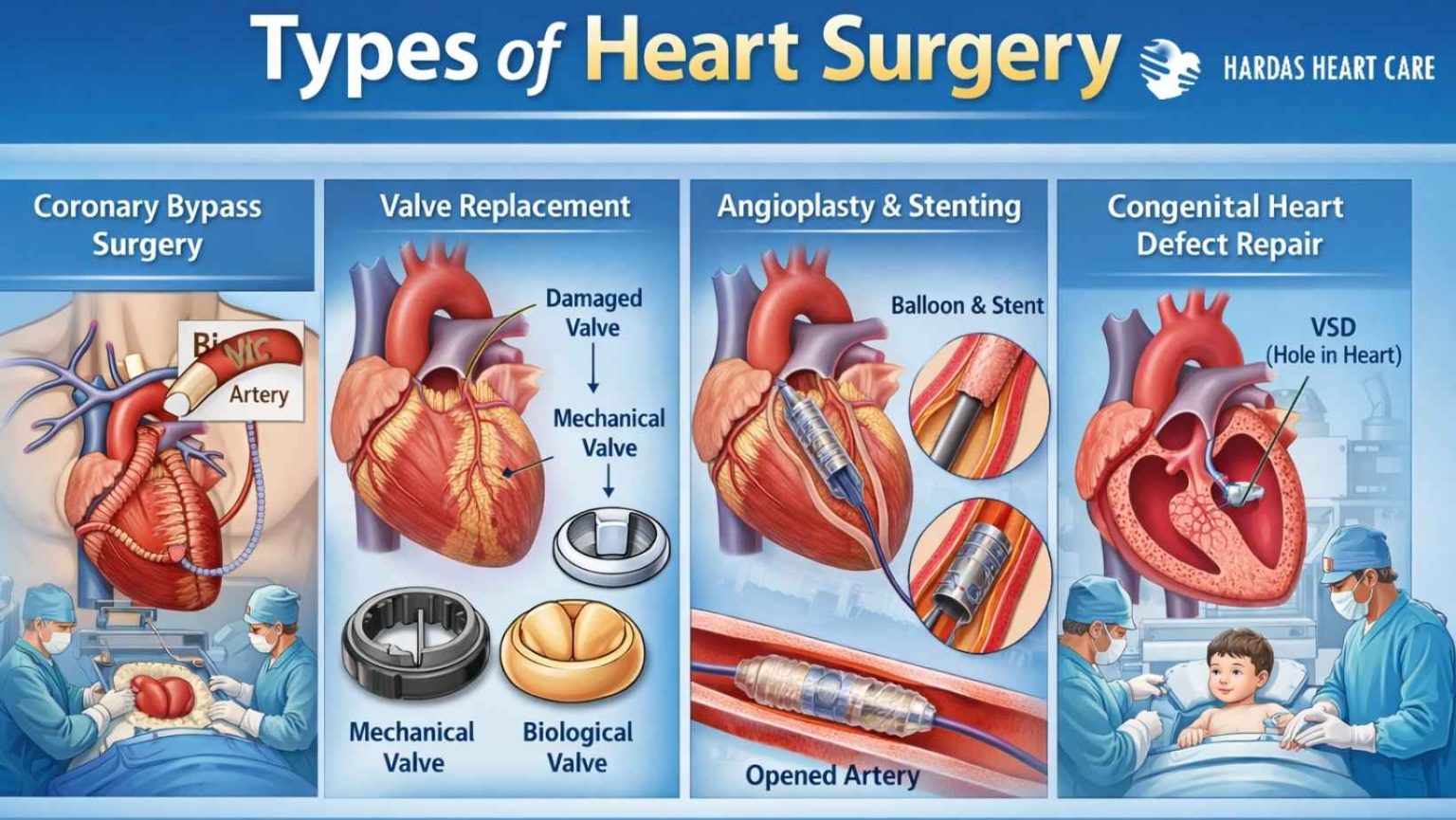
1. Coronary Artery Bypass Surgery (CABG)
Coronary artery disease is one of the most common heart problems. It occurs when arteries supplying blood to the heart become blocked.
CABG surgery creates a new pathway for blood flow by bypassing the blocked artery using a healthy blood vessel from another part of the body.
When is it needed?
- Severe blockages in coronary arteries
- Recurrent chest pain (angina)
- High risk of heart attack
This surgery significantly improves blood flow and reduces symptoms.
2. Heart Valve Repair or Replacement Surgery
Heart valves ensure that blood flows in the right direction. When they become narrow (stenosis) or leaky (regurgitation), the heart has to work harder.
In such cases, doctors may:
- Repair the valve (preferred when possible)
- Replace it with a mechanical or biological valve
Common conditions treated:
- Aortic stenosis
- Mitral valve regurgitation
- Tricuspid valve disease
Timely treatment prevents heart failure and improves quality of life.
3. Angioplasty and Stent Placement
This is a minimally invasive procedure, not a traditional open-heart surgery.
A catheter with a balloon is inserted into the blocked artery. The balloon is inflated to open the artery, and a stent is placed to keep it open.
Benefits:
- Less invasive
- Shorter hospital stay
- Faster recovery
It is often the first line of treatment before considering major surgery.
4. Heart Transplant Surgery
A heart transplant is performed when the heart is severely damaged and cannot function even after other treatments.
The diseased heart is replaced with a healthy donor heart.
Who needs it?
- End-stage heart failure
- Severe cardiomyopathy
- Life-threatening heart conditions
Though complex, it can be life-saving when done at the right time.
5. Congenital Heart Defect Surgery
Some people are born with structural problems in the heart. These are called congenital heart defects.
One common example is VSD (ventricular septal defect)—a hole in the wall separating the lower chambers of the heart.
Symptoms may include:
- Breathlessness
- Poor growth in children
- Frequent infections
Surgery helps correct the defect and ensures normal heart function.
6. Arrhythmia Surgery (Pacemaker or Ablation)
Irregular heart rhythms (arrhythmias) can be dangerous if untreated.
Treatment options include:
- Pacemaker implantation (to regulate heartbeat)
- Catheter ablation (to correct abnormal electrical signals)
These procedures are less invasive and highly effective in managing rhythm disorders.
Open vs Minimally Invasive Heart Surgery
Modern cardiac care offers two main approaches:
Open Heart Surgery
- Chest is opened to access the heart
- Used for complex procedures like bypass or valve replacement
Minimally Invasive Surgery
- Small incisions
- Faster recovery
- Less pain and scarring
Your doctor will recommend the best option based on your condition.
Recovery After Heart Surgery
Recovery varies depending on the type of surgery and patient health.
General recovery tips:
- Follow medication schedule strictly
- Maintain a heart-healthy diet
- Gradually increase physical activity
- Attend regular follow-ups
Cardiac rehabilitation programs play a key role in long-term recovery.
When Should You See a Heart Specialist?
Do not ignore early warning signs like:
- Chest pain
- Shortness of breath
- Irregular heartbeat
- Fatigue
Early consultation with the best heart hospital in pune or a trusted specialist can prevent major complications.
Final Thoughts
Heart surgery is no longer something to fear. With advancements in technology and expertise, outcomes are better than ever.
The key lies in early diagnosis, timely treatment, and choosing the best cardiovascular doctor in Pune for your care.
If you or your loved one is facing a heart condition, don’t delay evaluation. Even simple tests like a holter monitor test near me can detect hidden problems early and save lives.